London clay is one of the most challenging substrates on which any landscaping contractor operates, and it is, by a considerable margin, the soil beneath the majority of the capital’s gardens. If you have ever watched a newly laid patio crack along its mortar joints within a season, seen a garden wall develop a slow but insistent lean, or found that a tree removed from a rear garden was followed, years later, by doors that no longer close properly – you have witnessed London clay behaving exactly as its geology dictates. The problem is not that these outcomes are unpredictable. It is that they are, far too often, entirely predictable and insufficiently communicated before the landscaping work begins. Heave – the upward or lateral movement of ground caused by clay expansion – is the less discussed, frequently misunderstood counterpart to subsidence, and it carries consequences that can be significantly more expensive to resolve than the original landscaping project ever cost.
London Clay: What It Actually Does and Why It Behaves That Way
London Clay is a marine deposit laid down approximately 50 million years ago, and it underlies the great majority of central, inner and much of outer London at varying depths. Its defining characteristic is its high proportion of smectite clay minerals – a family of minerals with an extraordinary capacity to absorb water molecules between their crystal layers. When wet, London clay swells. When dry, it shrinks. The volumetric change across this cycle is not trivial: in prolonged drought conditions, London clay can shrink by enough to cause measurable vertical ground movement of 50–150mm or more in the upper soil horizons – the zone in which most landscaping and shallow foundation work takes place.
The shrinkage half of this cycle is the better-known risk. It drives subsidence claims, damages foundations and drains, and is widely covered in homebuyer surveys and structural engineer reports. But the expansion half – heave – is equally powerful and, in certain landscaping scenarios, considerably more destructive. Heave occurs when water returns to desiccated clay, whether through natural seasonal rehydration, changed drainage patterns or the removal of vegetation that was previously extracting moisture from the ground. The clay expands, and whatever sits above it – a terrace, a retaining wall, a path, a garden structure, or a building foundation – moves with it.
Heave: The Risk That Runs in Both Directions
Structural engineers and building insurers are familiar with two distinct types of heave relevant to London gardens, and a competent landscaping contractor should understand both.
Seasonal or cyclic heave is the annual pattern of movement driven by the shrink-swell cycle described above. Most London clay responds to the combined effects of seasonal rainfall, summer evapotranspiration and the moisture demands of nearby vegetation. Hard landscaping laid over clay that is moving seasonally will crack, lift and settle repeatedly – accumulating damage with each cycle rather than reaching a stable equilibrium. This is why cheap terrace installations in London clay gardens so frequently disappoint within two to three years, and why sub-base specification matters enormously.
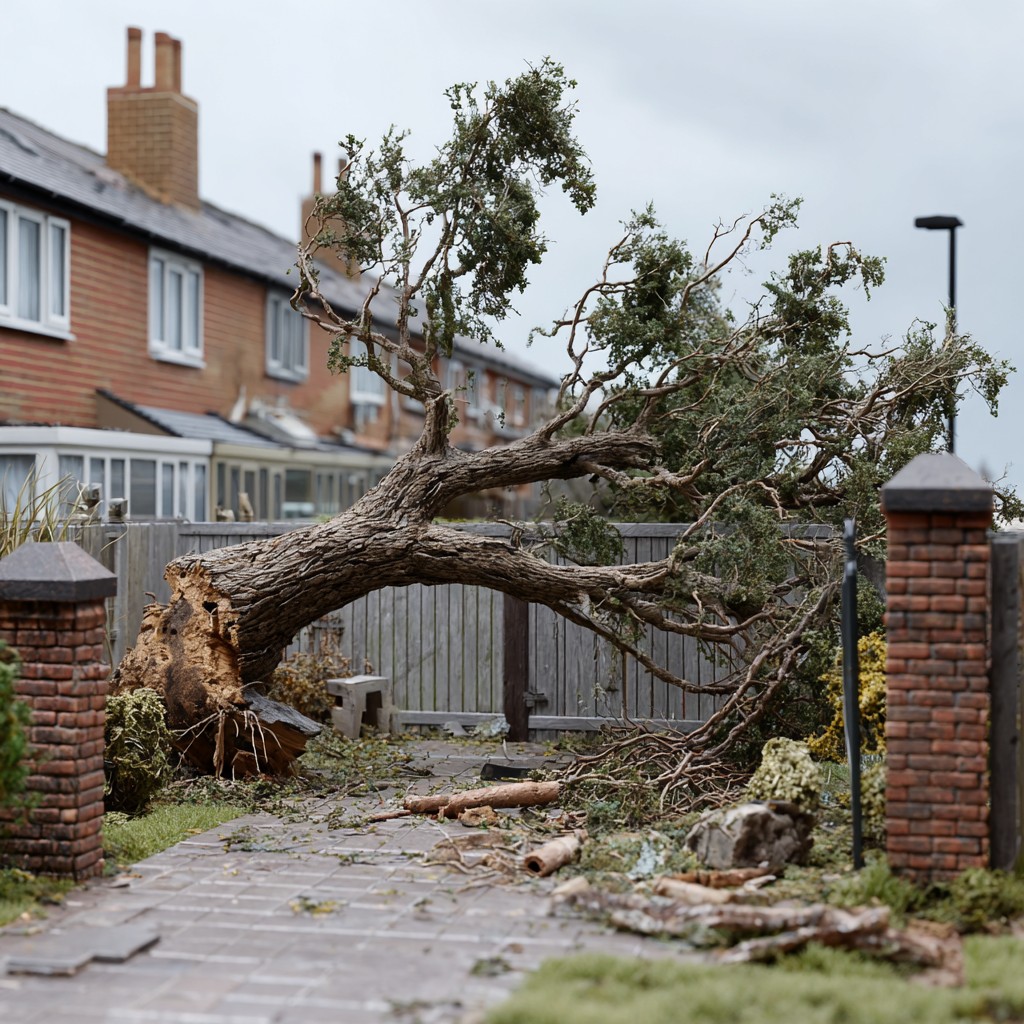
Post-tree-removal heave is the more serious and structurally significant risk. Established trees – particularly species with aggressive moisture demand such as oak, poplar, willow, elm and certain ornamental cherries – can extract very large volumes of water from London clay during the growing season, maintaining a desiccated zone around their root system that may extend well beyond the canopy spread. When such a tree is removed, the desiccated clay begins to rehydrate. The rehydration and subsequent expansion of that clay can continue for several years – in some documented cases, up to a decade – and the upward pressure it generates is sufficient to crack ground-floor slabs, lift garden structures and, in cases where foundations are shallow, damage the building itself.
The implications for landscaping design are direct. Removing a large, established tree as part of a garden redesign is not a neutral act from a ground movement perspective, and the decision to do so should always be preceded by a professional assessment of what that tree has been doing to the moisture balance of the surrounding ground.
Where Landscaping Decisions Directly Affect Heave Risk
Several of the most common landscaping interventions in London gardens have the potential to alter the moisture regime of London clay in ways that increase heave risk, and each deserves explicit discussion with clients before work begins.
Tree and shrub removal carries the risks already described. The larger the specimen, the longer its moisture demand has been influencing the surrounding clay, and the greater the volume of ground that will begin to rehydrate on its removal. Professional tree surveys and, where buildings are in close proximity, a pre-removal structural assessment, are advisable as standard rather than exceptional measures.
New impermeable paving changes the water balance of the clay beneath it by preventing rainfall infiltration while also reducing evapotranspiration from the surface. The long-term effect is a gradual increase in soil moisture beneath the slab – meaning that previously desiccated clay begins to recover towards its natural moisture content. If the area being paved was previously occupied by lawn, beds or other planted surfaces that were drawing moisture from the clay, this change can be significant.
Drainage alterations – redirecting downpipes, installing new soakaways, or significantly changing the grading of a garden to alter surface water flows – can concentrate water delivery into areas of clay that have previously been drier, with similar expansive consequences.
New tree planting close to existing structures introduces a long-term moisture demand that, particularly with high-demand species, can initiate a desiccation-shrinkage cycle that had not previously existed. The standard guidance on minimum planting distances from foundations – typically 1–1.5 times the mature tree height, depending on species – exists precisely to account for this dynamic.
What a Proper Site Assessment Should Establish Before Work Starts
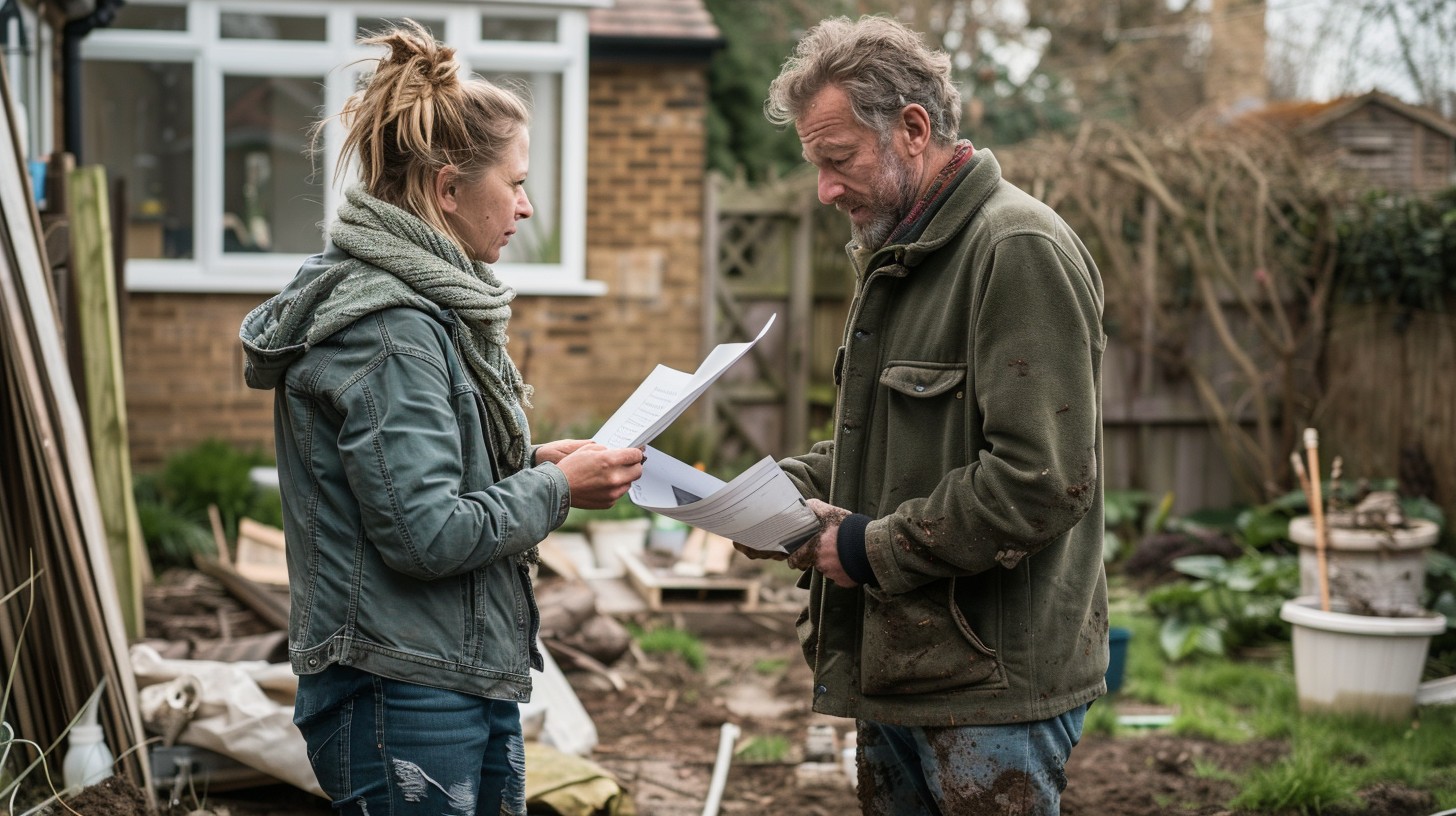
None of the risks described above are unknowable in advance. A professional landscaping contractor working on London clay should, as a matter of course, raise a series of questions before any significant scheme is designed or priced.
Are there existing trees to be removed, and if so, what is their size, species and proximity to the building and proposed landscaping features? Has a structural engineer assessed the implications of their removal? What is the depth of the clay layer and the existing moisture content in the area to be worked? Are there any existing drainage features whose modification is proposed? What are the foundation depths of the building, and have they been confirmed as adequate for the anticipated ground movement range?
Soil investigation for significant projects – a cable percussion borehole or trial pits examined by a geotechnical engineer – is not an extravagance. On a project where hard landscaping, retaining walls or new structures are proposed within proximity of existing buildings on shallow strip foundations, it is a straightforward risk management measure. The cost of a site investigation is invariably lower than the cost of remediating heave damage to a terrace, a garden wall, or – at the more serious end – a conservatory or ground-floor extension.
Designing for Clay: Principles That Make the Difference
Understanding the risk is the first step; designing around it is the practical deliverable. Several principles consistently produce better outcomes on London clay sites.
Flexible sub-base specifications for hard landscaping – using well-graded crushed aggregate rather than a rigid concrete bed wherever drainage and movement tolerance permit – accommodate seasonal clay movement without transmitting stress directly to the surface layer. Expansion joints at regular intervals in paved and terrace surfaces allow the inevitable minor movement to be absorbed without cracking. Edge restraints and perimeter details that allow vertical movement to dissipate gradually, rather than forcing it into rigid junctions, extend the service life of hard surfaces significantly.
Retaining walls on clay sites should be engineered rather than assumed: the lateral pressures exerted by saturated or expanding clay on an unengineered garden wall are frequently underestimated, and a retaining wall failure on a clay site is rarely a cheap repair. Appropriate drainage behind retaining structures – typically a granular backfill with a land drain at the base – reduces the hydrostatic and expansive pressure on the wall face.
Where tree removal is unavoidable and building proximity is a concern, the option of staged removal – reducing the tree over more than one season rather than taking it in a single operation – can moderate the rate at which the clay rehydrates, reducing peak heave pressure, though this approach requires both client agreement and arboricultural input.
The Ground Beneath the Garden: Why This Conversation Matters
The conversations that do not happen before a landscaping project begins are the ones that produce the expensive surprises afterwards. London clay is not an obstacle to good landscaping – the capital’s most beautiful and enduring gardens sit on it, have always sat on it, and will continue to do so. But it is a substrate that asks questions of every design decision made above it, and those questions deserve direct, honest, technically informed answers from the contractors appointed to work with it.
A patio that cracks within two seasons has not been let down by the materials or the craftsmanship alone – it has been let down by a conversation about ground conditions that was either abbreviated or avoided entirely. Heave is predictable, manageable and, with the right approach at the design stage, largely preventable. What it is not, when the consequences arrive, is cheap. The hidden cost of landscaping over London clay is not geological fate. It is the price paid for proceeding without the full picture – and that is a cost no well-informed client should ever have to bear.