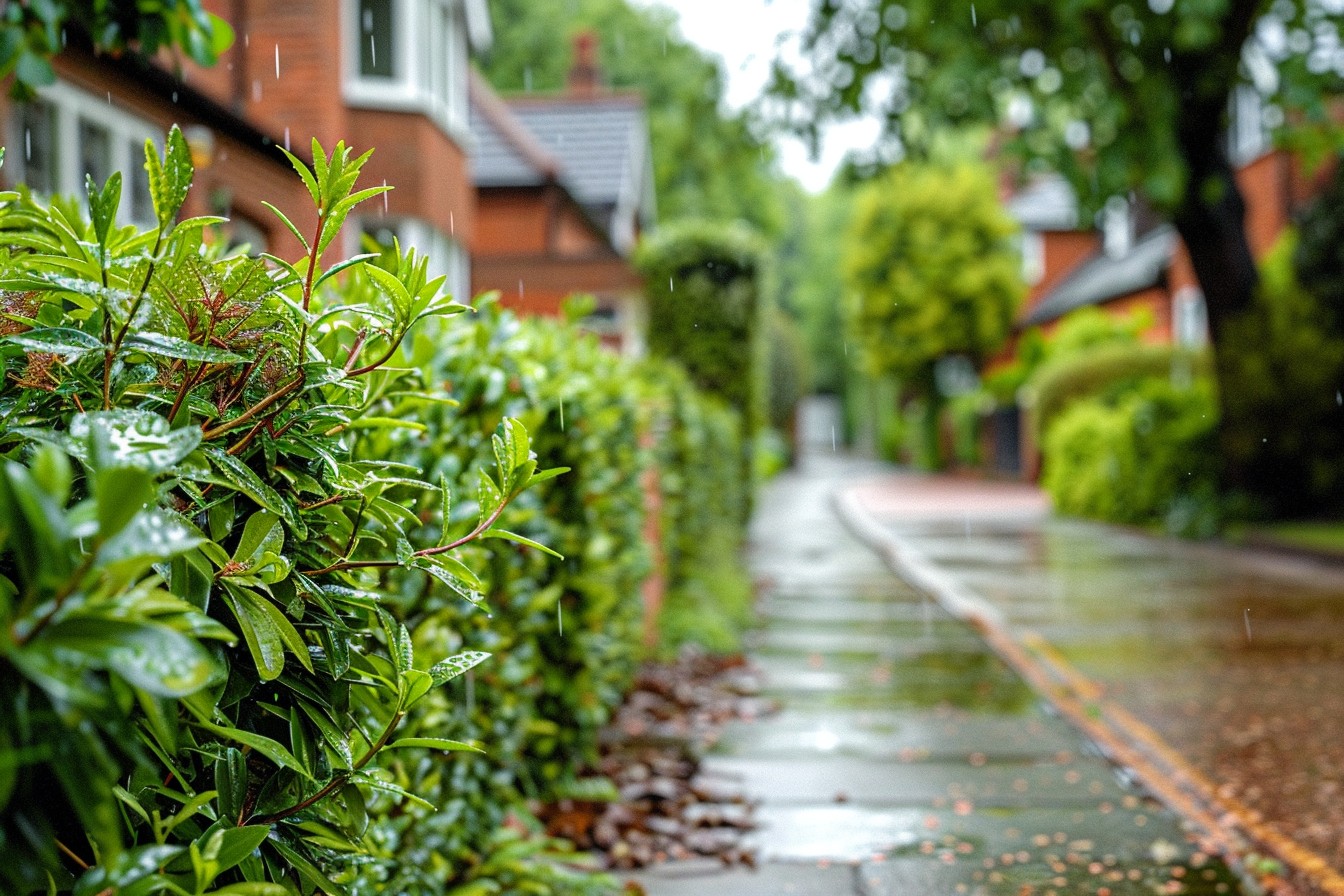
A well-chosen native hedgerow does something no ornamental boundary planting can match: it feeds, shelters and sustains pollinators across every season of the year. In London, where fragmented green spaces are under increasing pressure and soil conditions range from compacted clay to urban rubble fill, the right mix of native species transforms a garden boundary from a passive dividing line into a living, working habitat. The question is not whether a native hedgerow can support pollinators year-round in an urban setting – it demonstrably can – but which species to choose, how to combine them, and how to manage them so that the ecological value is never accidentally lost. This guide answers all three.
Why Native Species Outperform Ornamentals for Urban Pollinators
The relationship between Britain’s native flora and its native pollinators is not incidental – it is the product of thousands of years of co-evolution. Native bees, hoverflies, moths and butterflies have developed their foraging behaviour, life cycles and even body morphology around the specific flower structures, pollen chemistry and flowering times of indigenous plants. A Portuguese laurel or a photinia hedge may look handsome and grow reliably in London’s clay, but it offers a fraction of the ecological productivity of a mixed native planting.
London’s urban heat island effect adds a meaningful advantage here: temperatures in central and inner London typically run 2–4°C warmer than the surrounding countryside, which extends the active season for both plants and pollinators. Native species that might flower for three weeks in a rural Surrey garden can hold their blooms for four or five in Hackney or Clapham. For larger residential and commercial landscaping projects, the growing emphasis on biodiversity net gain – now embedded in the planning framework through the Environment Act 2021 – makes native hedgerow planting not just ecologically sound but increasingly relevant to planning compliance.
The Core Species – A Season-by-Season Breakdown
The single most important design principle for a pollinator-supporting hedgerow is seasonal succession. No one species provides continuous interest; the goal is a carefully chosen community of plants whose flowering, fruiting and structural value overlap and interlock across the calendar year.
Late Winter and Spring – The Early Providers
The pollinators that matter most in early spring are those emerging from winter dormancy with depleted energy reserves – queen bumblebees, solitary mining bees and early hoverflies – and they need accessible forage almost immediately. Two native species earn their place in any London hedgerow on this basis alone.
Blackthorn (Prunus spinosa) is arguably the most valuable early-season shrub in the British native palette. Its white blossom appears in March, often before a single leaf has opened, and it is one of the richest pollen sources available to bees waking from hibernation. Dense, thorny and vigorous, it also provides exceptional nesting habitat and forms a near-impenetrable stock-proof boundary in larger gardens. It tolerates London clay reliably and establishes quickly from bare-root stock.
Hawthorn (Crataegus monogyna) is the backbone of the traditional British hedgerow for good reason. Its May blossom – technically appearing in April in warmer London gardens – is among the most nectar-rich flowering events of the British countryside calendar, attracting hundreds of invertebrate species. It layers well, coppices readily, and provides dense structure throughout the year.
Late Spring and Summer – Peak Nectar Season
Once the hedgerow moves into its summer phase, the range of pollinator species visiting broadens significantly to include solitary bees, bumble bees, butterflies, hoverflies and beetles. This is the season to build in structural depth and successive flowering.
Dog Rose (Rosa canina) is a scrambling, arching species that threads through and above taller shrubs, producing simple, open, five-petalled flowers in June and July that are particularly attractive to solitary bees and pollen-gathering hoverflies. Unlike many modern garden roses, the single-flower form offers full access to its pollen – no breeding for double blooms has barred the door.
Elder (Sambucus nigra) earns its place both for speed of establishment and ecological generosity. Its large, flat-topped flower clusters in June are magnets for hoverflies and small beetles, and the plant establishes readily even in partial shade – useful in gardens where the hedgerow runs along a shadier northern boundary. It also contributes to the autumn berry layer.
Guelder Rose (Viburnum opulus) brings a different flower form – lacecap-style blooms with a ring of sterile florets surrounding a fertile centre – that is accessible to a wide range of insects. It flowers into July, bridges the gap between the spring flush and the late-summer lull, and provides spectacular scarlet berries and vivid autumn colour as a structural bonus.
Autumn – Berries, Seed Heads and Late Foragers
Autumn is not the end of pollinator season; it is a critical transitional period that is frequently undervalued in planting design. The species that carry the hedgerow through this phase serve two functions simultaneously: they provide late nectar and pollen for foragers building their final winter reserves, and they produce the berries and seed heads that sustain the wider food web.
Ivy (Hedera helix) deserves separate emphasis here. Allowed to scramble through the base and lower structure of a hedgerow, it flowers from September through to November – making it the single most important late-season nectar source in the British Isles. Common Carder bees, ivy bees (Colletes hederae, now well established across London), hoverflies and red admiral butterflies all depend on ivy’s late-flowering generosity.
Spindle (Euonymus europaeus) and Wayfaring Tree (Viburnum lantana) both contribute to the autumn layer, with late-interest berries and persistent structure that continues to offer foraging opportunities for remaining invertebrates well into October.
Winter Structure – Shelter, Evergreens and the Understory
The winter dimension of hedgerow ecology is the most frequently overlooked. Pollinators do not disappear entirely in December and January – they overwinter as adults, pupae, eggs or larvae within the hedgerow structure itself, and mild winter days in London can bring out early bumblebee queens seeking pollen. The hedgerow must, at this stage, function as shelter and habitat as much as food source.
Holly (Ilex aquifolium) is the essential evergreen anchor, providing year-round structural cover and, on female plants, the berry crop that persists through winter. Its own flowers, appearing in May, are underrated as a nectar source. Hazel (Corylus avellana) contributes early catkins from January onward – one of the first pollen sources available to queens emerging on mild days – and its hollow stems and leaf litter provide nesting sites for solitary bees and overwintering invertebrates. The hedgerow base should be left undisturbed through winter for exactly this reason.
Designing Your Hedgerow for a London Garden – Practical Considerations
Even a relatively modest London garden can accommodate a functioning native hedgerow, provided the planting is designed with layering in mind rather than a single-species run. A minimum depth of 60–90cm allows for a simple two-layer structure: taller framework shrubs (hawthorn, blackthorn, holly) at the back, with dog rose, guelder rose and elder in the mid-layer in front. In deeper plots, hazel and elder can form a genuine canopy layer, with ivy and herbaceous understory plants at the base.
Spacing of 30–45cm between plants at establishment is standard for a mixed native hedge, with bare-root stock planted between November and March offering the best value and establishment rates. London’s clay soils benefit from grit or organic matter incorporation at planting, and a mulch layer kept clear of stems significantly reduces competition in the first two seasons.
A mixed hedgerow of six or more species will always outperform a monoculture, both ecologically and aesthetically, and provides natural resilience against pest or disease pressure affecting any one species.
Maintenance Through the Seasons – Keeping Your Hedgerow Pollinator-Friendly
The most common misconception about native hedgerows is that they are inherently difficult to control. In practice, a well-established native hedge requires less annual maintenance than a formal clipped boundary – but the timing of that maintenance is critical.
The single most important rule is to cut after fruiting, not before. Late-summer cutting removes berries before they ripen and destroys the very ecological value the hedgerow was planted to provide. A late-winter cut – February at the earliest, after the hardest frosts have passed – allows the full berry and seed head season to complete, avoids disturbing nesting birds and overwinting insects, and still keeps the structure manageable. Rotational cutting, in which one-third of the hedgerow is cut each year on a three-year cycle, maximises flowering by ensuring that sections are always at the optimum stage for blossom production.
The Bigger Picture: What a Native Hedgerow Gives Back
The ecological argument for native hedgerow planting is compelling on its own terms, but it sits within a broader set of benefits that are directly relevant to London garden owners and property managers. A well-established hedgerow provides meaningful noise and particulate pollution buffering along road-facing boundaries – a consideration of genuine practical value in inner London. It acts as a privacy screen that improves with age rather than requiring replacement. It contributes to urban cooling through transpiration and shading, and plays a measurable role in carbon sequestration over its lifetime.
There is also a growing alignment between native wildlife planting and property value, particularly as buyers and commercial tenants place increasing weight on outdoor amenity and demonstrable environmental credentials. Planning policy in London is moving steadily in the same direction, with biodiversity net gain obligations, urban greening factor requirements and the Mayor’s broader green infrastructure agenda all pointing towards a landscape in which native hedgerow planting is not a niche choice but a mainstream expectation.
A native hedgerow, planted well and managed intelligently, is one of the most durable and productive investments a London garden can make – for its wildlife, its owners, and the wider urban ecosystem it quietly supports.