Moving into a new-build property in London often comes with an assumption that the landscaping, and particularly the trees, have been properly planned, properly planted and properly provided for. That assumption is sometimes well founded. Frequently, it is not. London’s planning framework now places meaningful obligations on developers to retain existing trees, deliver measurable gains in canopy cover, and maintain new planting through its most vulnerable early years – obligations that are more specific, more enforceable and more consequential than many new residents realise. Understanding what those obligations are, how they are structured, and where the gaps tend to open up between policy intention and delivered reality is genuinely useful knowledge for anyone living on, or considering purchasing a property within, a new-build development in the capital.
The Policy Framework Behind the Planting
The London Plan, Policy G7 and the Urban Greening Factor
The policy architecture driving developer tree obligations in London operates at several levels simultaneously. At the strategic tier, the London Plan 2021 contains two policies of direct relevance. Policy G7 – Trees and Woodlands – requires that development proposals make a positive contribution to the urban forest by retaining existing trees wherever possible, replacing any that are lost on a minimum one-for-one basis, and seeking a net gain in canopy cover as a default expectation rather than an aspirational outcome. The policy applies to all scales of development and requires that trees be integrated into the design from the earliest stage, rather than treated as an afterthought to be accommodated around built form.
Policy G5 – the Urban Greening Factor – adds a scoring mechanism to this ambition. Developments in London are required to achieve minimum greening scores that reflect the type and quantity of green infrastructure delivered, including trees. Mature canopy trees score significantly higher than hedges, green roofs or ground-level planting, which creates a direct policy incentive for developers to commit to meaningful tree planting rather than meeting their greening obligations through lower-tier interventions alone.
Borough Strategies and the Urban Tree Canopy Programme
The Mayor’s broader urban forest ambitions are translated into local policy through individual borough tree strategies and, increasingly, through Urban Tree Canopy assessments that map existing canopy cover at ward and street level across London. Many boroughs have identified specific areas of canopy deficit – typically lower-income inner-city areas with historically low tree cover – and have embedded requirements for enhanced canopy contributions from development in those zones. For new-build residents, this means that the trees on and immediately around their development may have been required as part of a broader borough-level canopy target, not merely as aesthetic landscaping for the scheme itself.
What Developer Obligations Look Like in Practice
Tree Retention During Construction
Before a single new tree is planted, the first obligation is to protect what already exists. British Standard BS 5837:2012 – Trees in Relation to Design, Demolition and Construction – sets out the methodology by which existing trees on or adjacent to a development site are surveyed, categorised and, where retained, protected during the construction process. Local planning authorities require a Tree Survey and Arboricultural Impact Assessment as part of most planning applications involving significant vegetation, and the Arboricultural Method Statement that accompanies a planning consent specifies in detail what tree protection measures must be in place before groundworks commence.
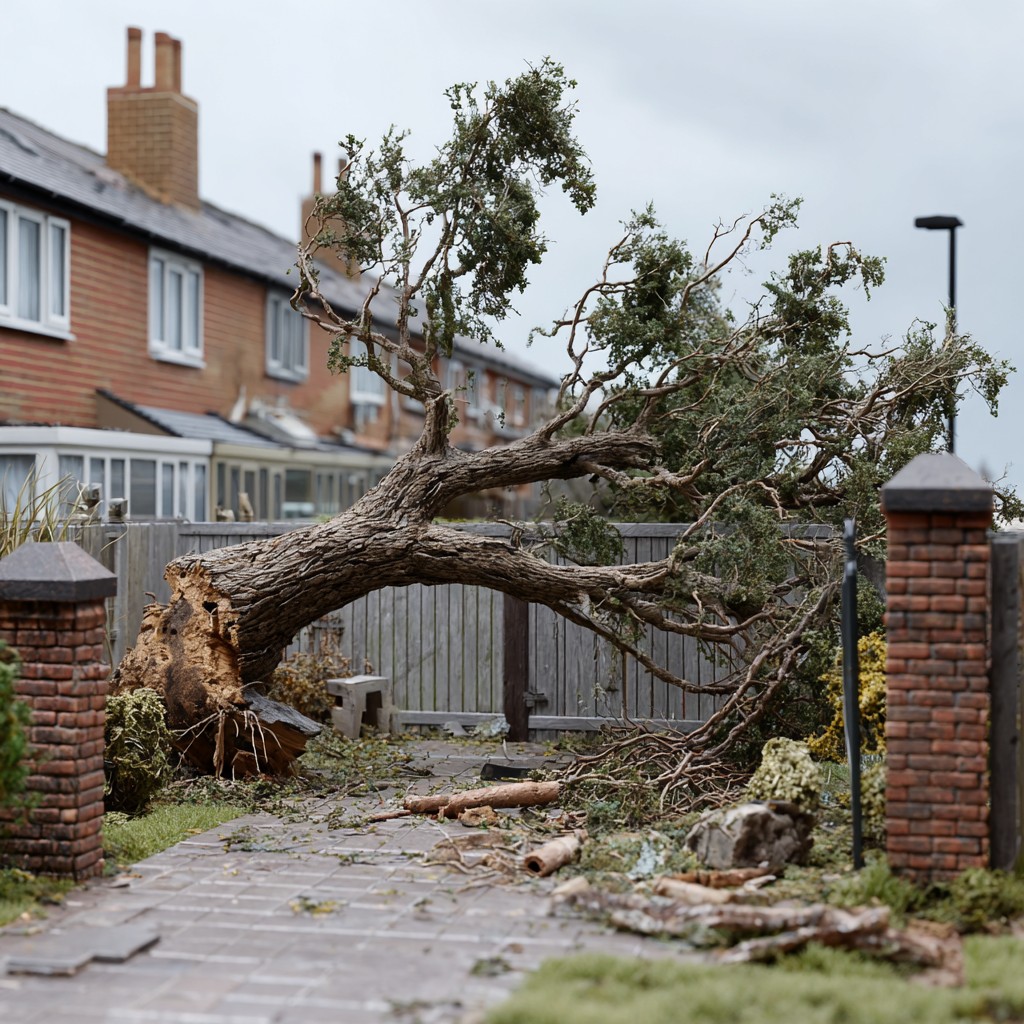
In theory, this framework provides robust protection for retained trees. In practice, root protection zones are compromised by groundworks, protective fencing is moved to accommodate construction traffic, and soil compaction within root zones during the build process causes damage that may not manifest visibly for several years after the residents have moved in. Trees that appear healthy at handover can decline and fail within three to five years of occupation if their root systems were significantly compromised during construction – a pattern that is well documented and entirely preventable with adequate site supervision.
New Planting Requirements and Canopy Targets
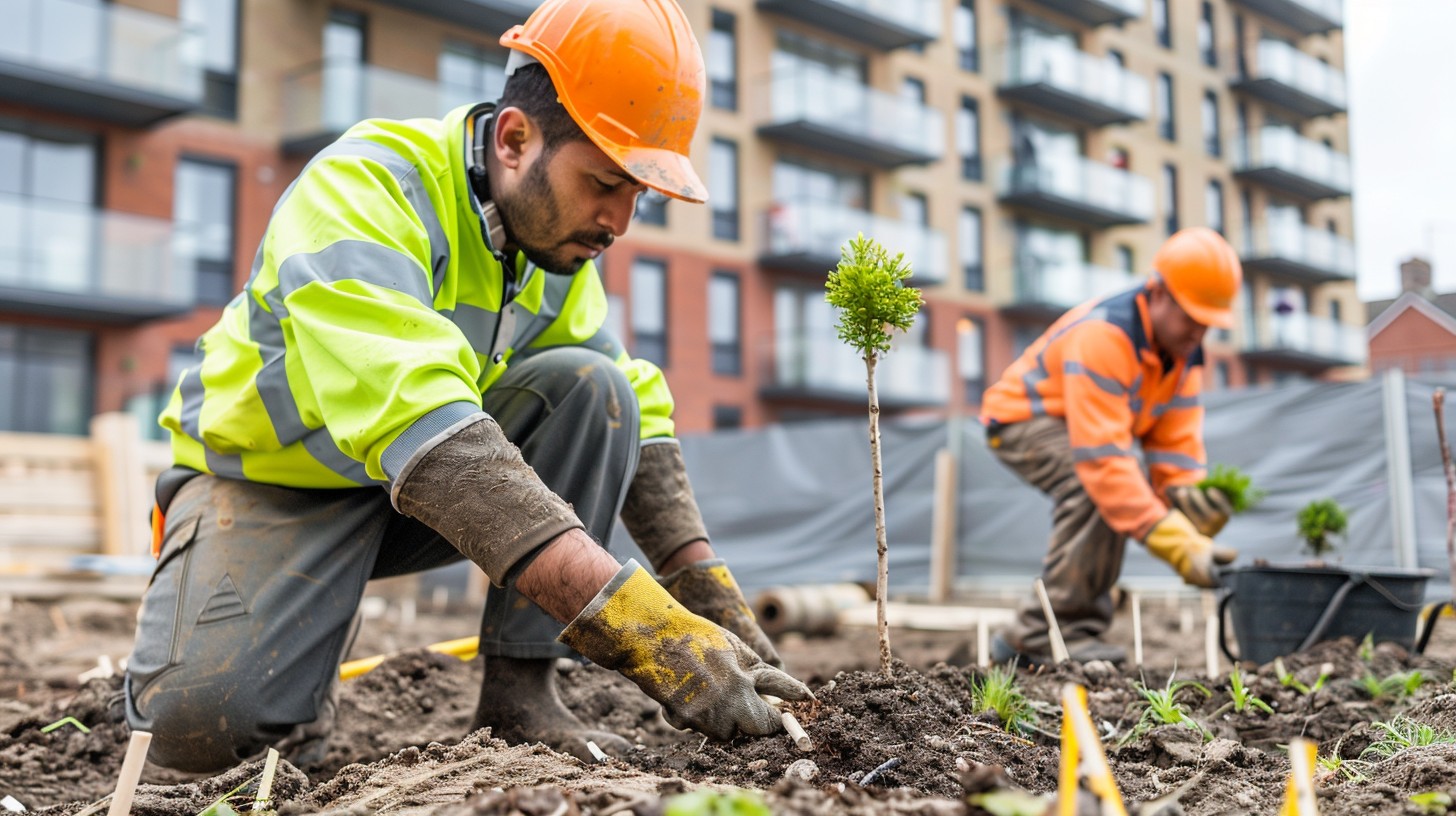
Where trees cannot be retained, or where the development’s canopy target requires new planting beyond what existing trees provide, developers are required to deliver new specimens as a condition of planning consent. The specification of those trees – species, size at planting, location and root environment – matters considerably. A development that meets its canopy obligations on paper by planting twenty semi-mature trees in inadequate soil volumes, without proper irrigation provision or sufficient structural root space, has technically complied with its planning conditions while delivering a scheme in which the majority of those trees will fail to reach anything approaching their intended mature form.
The quality of tree pit design on new-build developments is one of the most consistent points of divergence between policy ambition and delivered outcome in London. Trees planted in hard landscaping require engineered soil cell systems or structural substrate installations that provide adequate rooting volume beneath paved surfaces. Where these are specified and installed correctly, urban trees can establish and thrive in constrained environments. Where they are value-engineered out of the scheme or inadequately sized, the trees decline slowly, become a liability, and are eventually removed – returning the site to a lower canopy position than the planning approval intended.
Planning Conditions, Section 106 and What Gets Locked In
The mechanism by which developer tree obligations are made legally binding takes two principal forms. Planning conditions – attached directly to the planning consent – specify what must be planted, when, and to what standard, and require that planting be maintained and replaced if it fails within a defined period. Section 106 agreements – negotiated legal obligations between the developer and the local planning authority – can go further, securing financial contributions to off-site tree planting, committing to long-term maintenance regimes, and in some cases establishing management structures for green infrastructure on the completed development.
For new-build residents, the practical implication is that the trees on their development are not discretionary features that the management company or freeholder can remove, replace or neglect at will, without reference to the planning framework. Where trees were required by planning condition or Section 106, their removal or significant alteration may require either a formal discharge of that condition – which the local planning authority must approve – or a planning application in its own right. Trees on new-build developments that are also subject to Tree Preservation Orders carry additional protection that applies regardless of the planning history.
New residents are strongly advised to establish, at the point of purchase or shortly thereafter, what planning conditions and Section 106 obligations relate to the trees and landscaping on their development. This information is publicly available through the local planning authority’s online portal, and it is material to understanding what maintenance the developer, management company or residents’ management organisation is actually obligated to deliver.
The Maintenance Gap: Where Obligations End and Reality Begins
Planning conditions for tree planting routinely include a maintenance and replacement period – typically three to five years – during which the developer remains responsible for ensuring that newly planted trees establish successfully and are replaced if they die or fail to thrive. After that period expires, responsibility transfers – usually to a management company, residents’ management organisation, or, in some cases, the local authority where trees are in public realm.
This transition point is where the most significant failures tend to occur. Management companies without specialist arboricultural expertise may not recognise early signs of tree stress, may apply inappropriate maintenance regimes – over-pruning, strimmer damage to stems, inadequate irrigation in establishment years – or may simply deprioritise tree care in favour of more immediately visible maintenance tasks. Trees that were healthy at the end of the developer’s maintenance period can decline sharply once that professional oversight is withdrawn.
The practical implication for residents is that active engagement with how the development’s trees are being managed is worthwhile from the earliest stage of occupation. Asking the management company or residents’ board what arboricultural maintenance programme is in place, who carries it out, and how tree condition is being monitored is entirely reasonable – and it is far easier to establish good practice early than to reverse the consequences of several years of neglect.
What New Residents Are Actually Inheriting
The trees that come with a new-build development represent, at their best, a long-term asset that will grow more valuable – ecologically, aesthetically and financially – with each passing decade. A well-specified, well-planted and well-maintained urban tree canopy moderates temperature, filters air pollution, manages surface water, supports biodiversity and, as decades of research consistently confirms, adds measurable value to residential property. The policy framework described above exists precisely because those benefits are now recognised as infrastructure, not ornamentation.
What new residents are inheriting, however, is not simply a set of trees – it is a set of decisions made at planning, design and construction stage that will determine whether those trees reach their potential or decline and disappear within a generation. Understanding the obligations behind those decisions, scrutinising how well they have been discharged, and engaging actively with how the trees on the development are managed going forward is not pedantry. It is the difference between a development whose canopy matures and delivers on its promise, and one that arrives at the ten-year mark with a collection of struggling, diminished specimens that no longer serve the purpose for which they were required.
Roots, Rights and Responsibilities: Making the Most of What Policy Has Secured
London’s urban tree canopy policy is, by international standards, a serious and ambitious framework. The obligations it places on developers are real, the mechanisms for enforcing them are available, and the long-term ambition – a greener, cooler, more biodiverse city in which trees are treated as essential infrastructure rather than incidental decoration – is one that benefits every Londoner, including those who have recently moved into the new-build homes that policy is specifically designed to green.
The gap between that ambition and the lived experience of residents on many new-build developments is not primarily a policy failure. It is an information and engagement failure – a disconnect between what has been secured in planning documents and what residents know about, monitor and advocate for in practice. The canopy that London’s planning framework has worked to deliver on new-build sites across the capital is worth protecting. Knowing what it is, why it is there, and what obligations surround it is the first step in doing so.